

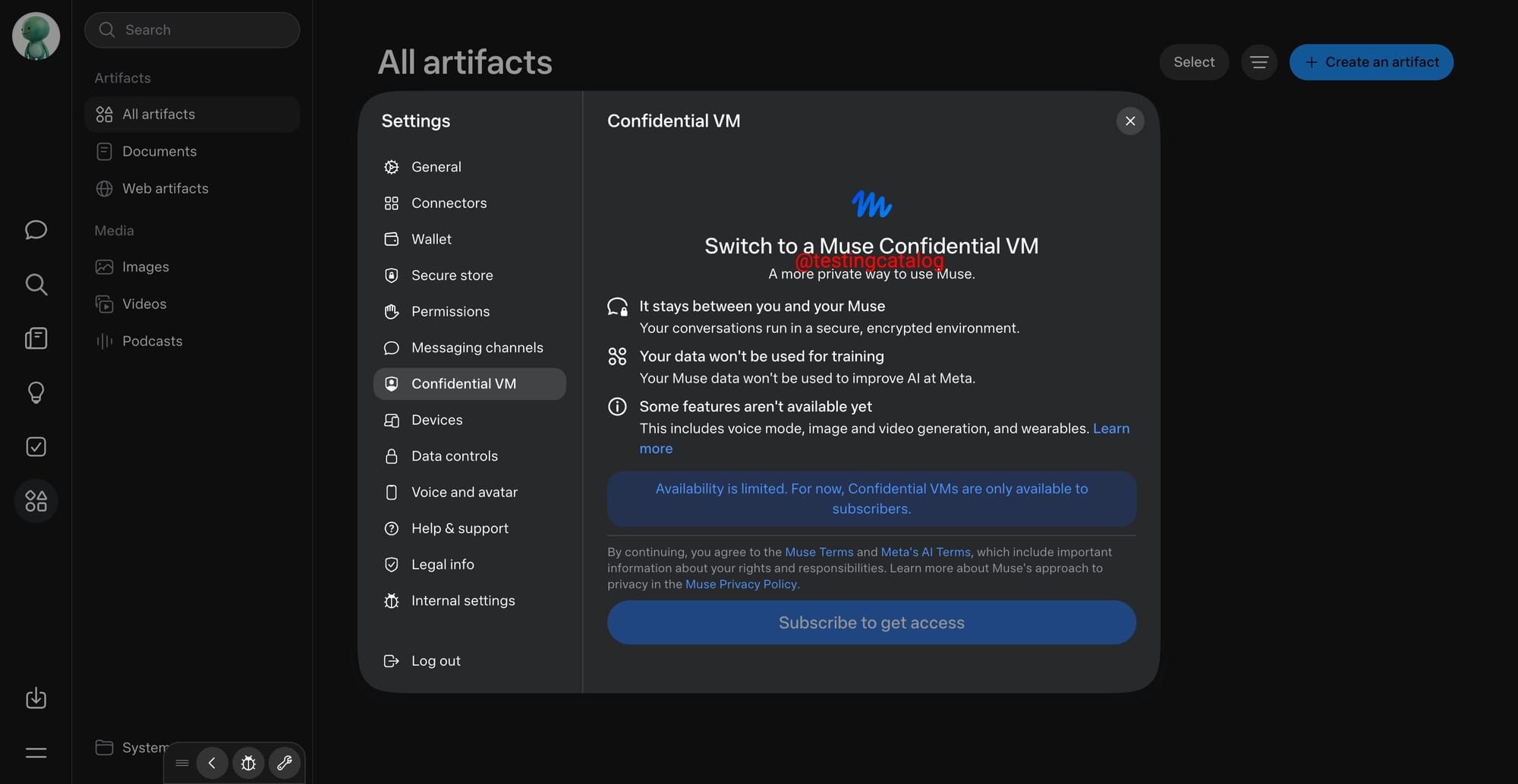
Meta is preparing to introduce Muse Confidential VM, a more private way to use its personal AI agent. The company previously teased the feature, and it is now partially implemented in the web interface. A dedicated settings section will allow users to enable it.
According to the notice, conversations will run in a secure, encrypted environment that keeps data private, even from Meta. Conversations and other data processed in this mode will not be used to train Meta’s AI models. Unlike the existing Muse Secure VM, Confidential VM is designed to prevent even Meta from accessing users’ information. Meta previously confirmed plans to launch the technology before the end of 2026.
Later this year, Meta will introduce Muse Confidential VM, where the whole VM, including a person’s data and conversations with Muse, is encrypted with a key only they hold, so not even Meta can access it.
Private mode will initially have several limitations. Voice mode, image and video generation, and support for wearable devices such as Meta AI glasses and the Muse pin may not be available. Access also appears to be restricted to Meta AI subscribers, with users prompted to upgrade before they can enable the feature. The exact release date and plans for broader availability remain unclear.
Meanwhile, early signs suggest that Muse is becoming accessible through the web in the European Union. This could indicate that Meta is preparing its backend infrastructure for European users, although the company has not announced an official EU launch date.
Meta is positioning Muse as a proactive assistant spanning messaging, web services, and wearable devices. Competitors such as Grok Bot are expanding into other markets, while Muse and OpenAI’s Dots remain regionally restricted. Against that backdrop, broader availability could become just as important as new capabilities.
Sources and related context
- Meta introduces Muse and outlines Confidential VM plans: Supports: Meta's September announcement supports the stated plan to introduce Muse Confidential VM before the end of 2026.
- How Meta built safety into Muse: Supports: Meta's technical explanation supports the distinction between the existing Secure VM and Confidential VM's intended protection against access by Meta itself.


