

Meta officially launched Muse, its personal AI agent, on September 8, with availability in the US across iOS, Android, the web, and WhatsApp. While the public release already covers tasks such as email, shopping, travel, payments, and longer-running work, Meta is developing additional capabilities that remain hidden.
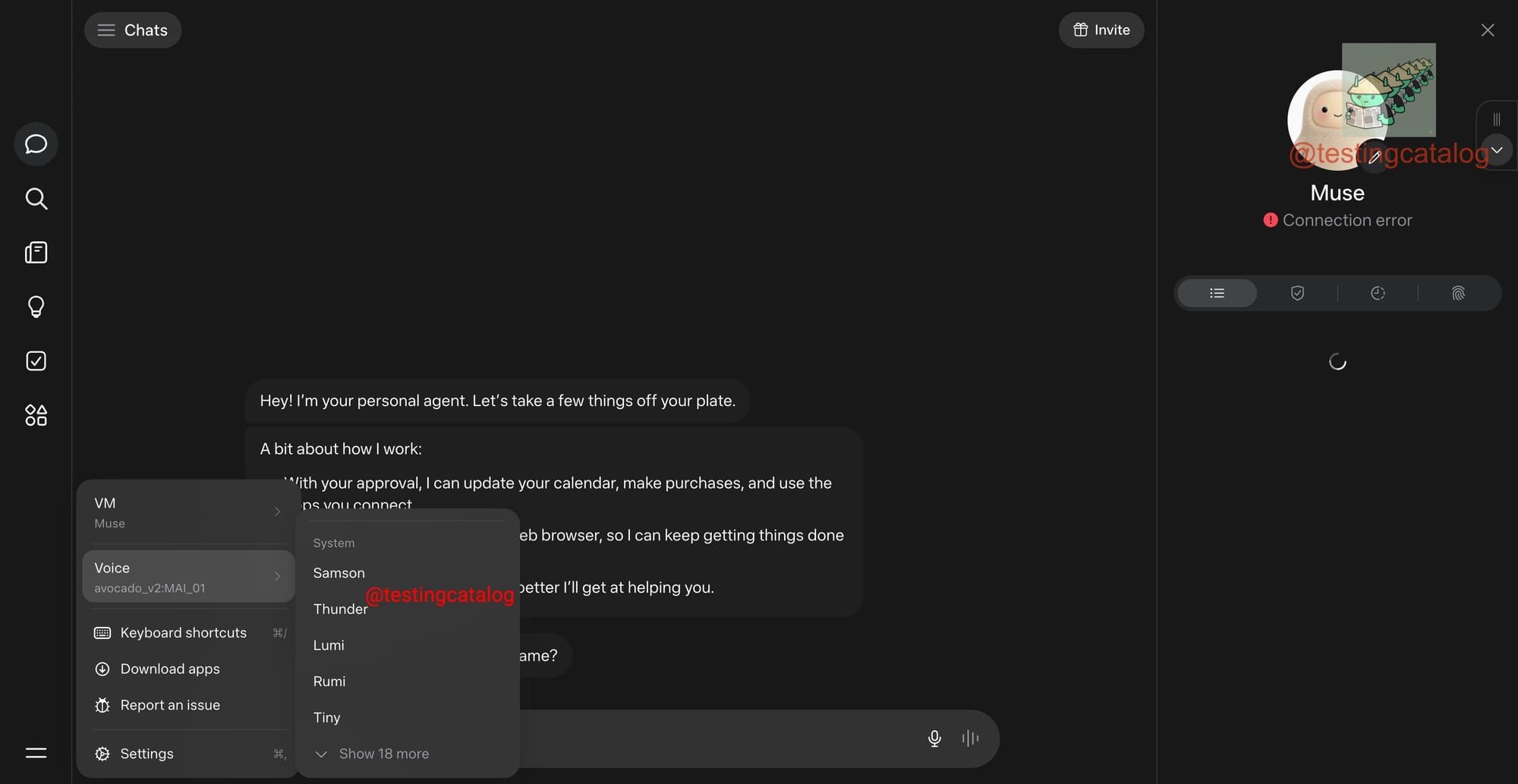
One of them is a dedicated voice mode similar to Meta AI. Muse is being prepared with a voice button and a selector with multiple voices, but it also supports generating custom voices on request. In testing, asking Muse to create a robotic voice generated a new voice and added it directly to the voice library, where it could then be selected for conversations.
Some internal labels also reference Microsoft voice technology, apparently pairing Muse Spark with a Microsoft voice model. Microsoft currently offers MAI-Voice-2-Flash for low-latency speech and voice cloning. This doesn't necessarily mean Meta plans to use it in production, since the company can test external models alongside its own systems.
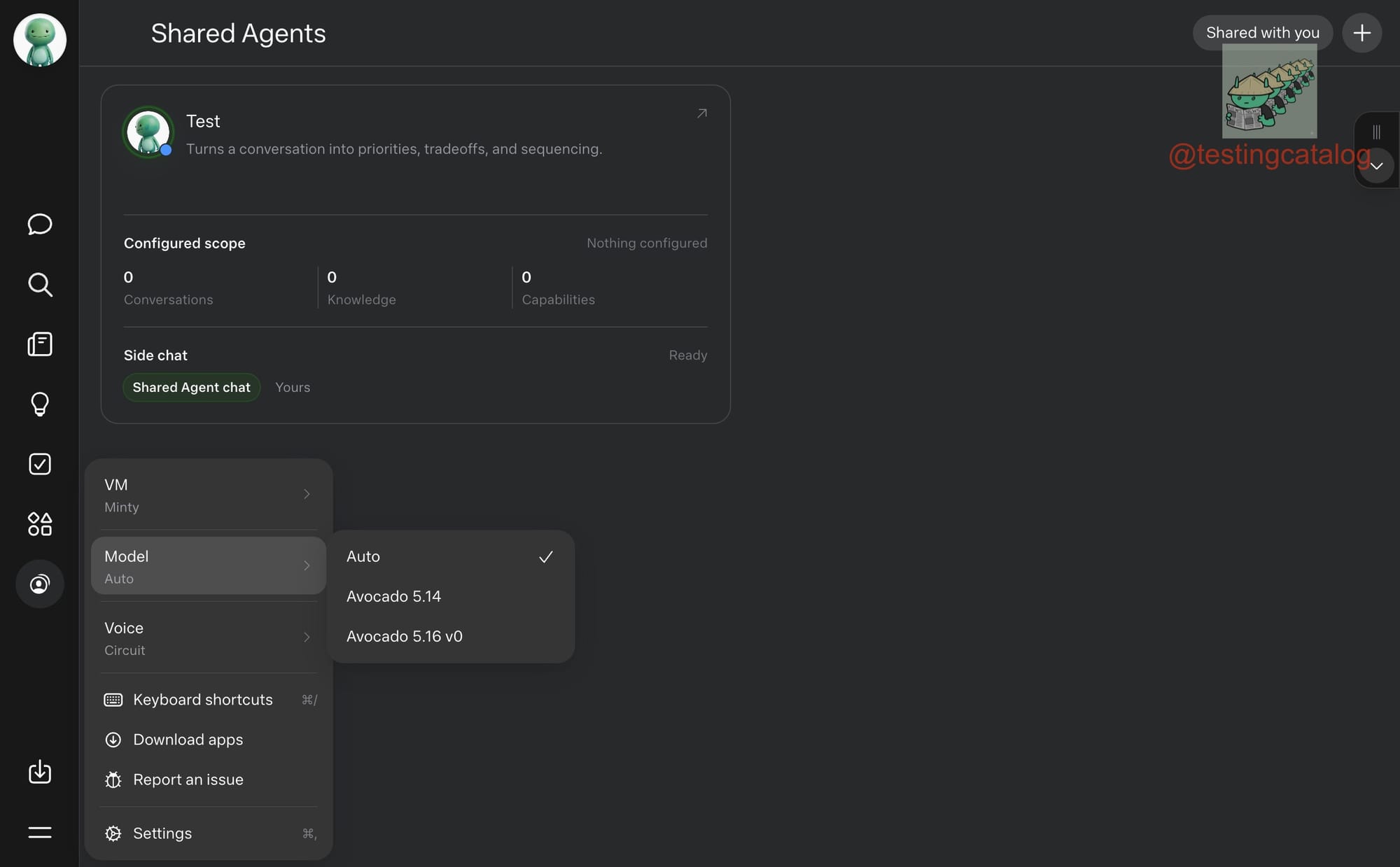
Meta also appears to have additional controls over how Muse reasons, though these settings aren't exposed in the public interface. Two model configurations currently appear under the codenames Avocado 5.14 and Avocado 5.16 v0. Avocado 14 corresponds to the existing Muse Spark 1.3 setup, while Avocado 16 could be a placeholder for the upcoming Muse Spark model update. The rumored "Watermelone" model is expected to land soon as well but will likely no longer share the "Avocado" codename.
That makes Meta Connect on September 23-24 particularly relevant. Meta describes Muse Spark as the model powering its new agent, while a newer model could give Muse another capability jump shortly after launch. For now, neither the custom voice system, reasoning controls, nor the Avocado 16 configuration are publicly accessible, and Meta has not announced when they will ship.
Editorial notes 👀
- Meta's September 8 public announcement names the product Muse and says it is rolling out in the US on iOS, Android, and muse.ai, powered by Muse Spark.
- Microsoft publicly documents MAI-Voice-1 as a text-to-speech model with curated voices and voice prompting, while its later MAI-Voice-2 release supports zero-shot voice prompting with consent guardrails.


